Pet Temperament 101: Read Dog & Cat Behavior Better
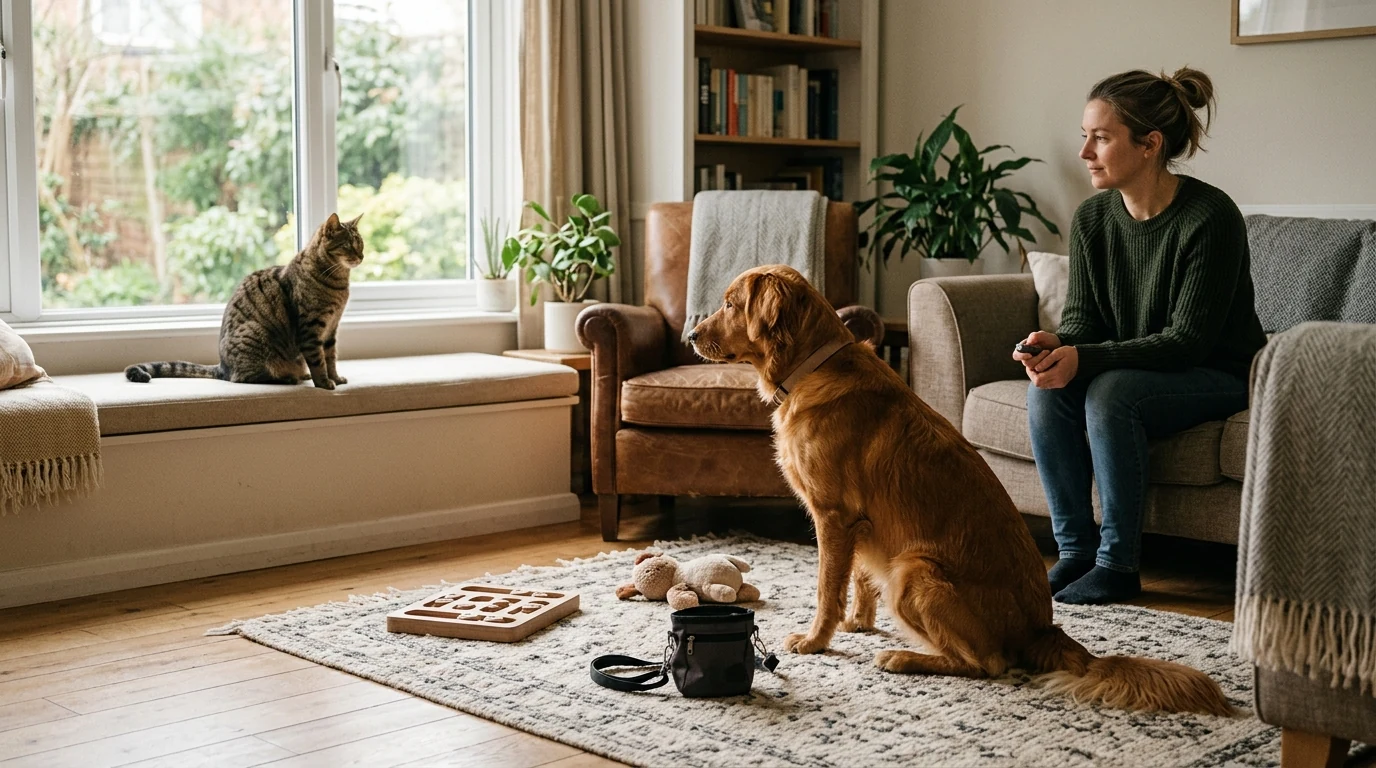
Understanding Your Pet’s Temperament: Decoding Dog and Cat Behavior for Better Care and Training
Temperament is the steady pattern behind a pet’s day-to-day reactions—how quickly they recover from stress, how strongly they respond to novelty, and what motivates them to engage or withdraw. Learning to read temperament (rather than labeling a pet as “good” or “bad”) helps prevent common behavior problems, makes training more effective, and improves welfare through better handling, enrichment, and routines. This guide breaks down core temperament traits in dogs and cats, what shapes them, how to observe them safely, and how to match care and training to the individual in front of you.
Temperament, personality, and behavior: what’s the difference?
These terms get used interchangeably, but separating them makes your training and care decisions clearer.
- Temperament: relatively stable emotional and reactivity tendencies (for example, bold vs. cautious; sensitive vs. resilient).
- Personality: broader long-term patterns influenced by temperament plus life experience and learning.
- Behavior: what your pet does in a specific context (a single moment), shaped by triggers, reinforcement history, health, and environment.
Why this matters: changing behavior is often easier than changing temperament. A sensitive pet can absolutely learn skills and coping strategies—but the plan should respect their baseline sensitivity and coping style.
A common misconception is calling a pet “stubborn.” What looks like defiance is often low motivation, confusion, fear, pain, or a history of mixed reinforcement (sometimes the behavior “works,” sometimes it doesn’t).
Quick guide: traits to watch and what they can mean
| Trait | How it shows up | Supportive care and training focus |
|---|---|---|
| Sensitivity to noise/touch | Startles easily, avoids handling, tense body | Gentle handling, predictable routines, desensitization, safe hiding/rest areas |
| Sociability | Seeks or avoids contact with people/animals | Consent-based interaction, controlled introductions, choice and distance |
| Boldness/curiosity | Investigates novelty vs. freezes/hides | Gradual exposure, enrichment puzzles, reinforce calm exploration |
| Impulsivity | Grabs, jumps, pounces quickly; struggles to pause | Impulse-control games, clear cues, management (leashes, baby gates) |
| Frustration tolerance | Vocalizes, nips, scratches, paws when blocked | Short sessions, easy wins, teach alternatives, increase mental enrichment |
| Recoverability | Stays upset for long vs. settles quickly | Lower-intensity triggers, more decompression time, calming routines |
What shapes temperament: genetics, early life, and environment
- Genetics and selective breeding: baseline traits can be influenced by breed tendencies and lines (for example, quick motion sensitivity in many herding dogs; some cat lines trending more sociable).
- Critical socialization windows: puppies and kittens learn what’s “safe” or “unsafe.” Missed exposure—or overwhelming exposure—can increase fear responses later.
- Maternal care and early handling: calm, consistent early experiences can support resilience; chaotic environments can raise stress sensitivity.
- Life experiences: one painful or scary event (rough grooming, a dog attack, a frightening vet visit) can create strong avoidance associations.
- Health and pain: discomfort can mimic temperament changes (irritability, hiding, defensive aggression). Sudden shifts deserve a veterinary check.
Reading body language: calm, stressed, and escalating signals
Temperament shows up through body language, especially when a pet is deciding whether they feel safe. For dog body language basics, see the American Kennel Club. For cats, the RSPCA’s cat body language guide is a strong reference.
Dogs
- Calm/comfortable: loose muscles, soft eyes, relaxed mouth, neutral tail, normal breathing, choosing to approach and disengage.
- Stress signals: lip licking, yawning, head turns, “whale eye,” tucked tail, paw lift, sudden sniffing, freezing.
- Escalation: stiff posture, hard stare, growl, baring teeth, snapping. Treat growls as information—create distance immediately.
Cats
- Calm/comfortable: upright ears, relaxed tail, slow blinks, normal grooming, choosing social contact and then walking away easily.
- Stress signals: crouching, tail tucked or twitching, ears sideways/flat, dilated pupils, piloerection, hiding, over-grooming.
- Escalation: growl/hiss, swat, bite. Avoid reaching into hiding spots; use barriers or a towel/blanket for safer movement when needed.
A simple temperament check you can do at home (safely)
Matching care to temperament: routines, enrichment, and handling
Training strategies that respect temperament (dogs and cats)
Reinforcement-based training helps pets feel safe while they learn, and it reduces the risk of fear-based aggression. For a science-based stance on humane training and socialization, review the American Veterinary Society of Animal Behavior (AVSAB) position statements.
When behavior signals a bigger problem: pain, anxiety, and aggression
A practical reference you can keep on hand
A structured guide makes it easier to notice temperament patterns, interpret body language, and choose training steps that fit both dogs and cats. For a step-by-step reference that moves from observation to routines, enrichment, and cooperative care, see Understanding Your Pet’s Temperament: A Complete Guide to Decoding Dog and Cat Behavior for Better Care and Training.
If you track training notes on your phone during walks or practice sessions, keeping your device powered can help you stay consistent with timing and logs; the USB Type C to Lightning Fast Charging Cable for Apple iPhone 15/14/13/12 is a simple add-on for that routine.
FAQ
Can a pet’s temperament change over time?
Temperament is relatively stable, but how it shows up can shift with maturity, training, health, and environment. Pain, chronic stress, or illness can also change behavior quickly, so sudden changes should be evaluated by a veterinarian.
How can you tell the difference between fear and stubbornness in training?
Fear often looks like avoidance, freezing, a tense body, scanning the environment, or refusing treats they normally love. Lower the difficulty, add distance from the trigger, and use reinforcement-based steps rather than pressure or repeated commands.
What is the safest way to introduce a shy cat or cautious dog to new visitors?
Set up choice and distance: keep the room quiet, allow hiding or a retreat route, and have visitors toss treats away from their body rather than reaching. Avoid direct eye contact, keep sessions short, and stop if stress signals escalate.











Leave a comment